Peptides are signals, not fuel. That single distinction explains most of what people get wrong about dosing them, and it is worth sitting with before you buy anything.
A receptor is not a fuel tank
Protein is a material — more of it gives the body more to build with. A peptide is an instruction, and an instruction delivered twice as loudly is not twice as clear. A receptor that is already saturated does not respond harder to a larger dose. It responds less, and then it stops responding at all.
That is receptor downregulation, and it is not a rare edge case. It is the ordinary, predictable response of a system that has decided a signal is no longer informative.
The useful range is narrower than the marketing
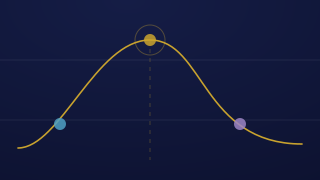
For most compounds in this category the useful window is measured in micrograms and is narrow at both ends. Under it, nothing happens. Over it, the effect does not grow — it flattens, then reverses, and recovering costs you a washout period you did not plan for.
The practical consequence: the dose that produced a result in week two is very often the dose that will still be producing one in week eight, provided you leave it alone.
Watch who benefits from the bigger number
A supplier who sets doses by margin rather than by pharmacology has an obvious incentive to sell you a larger vial and a schedule that empties it faster. The literature rarely agrees with them, and the certificate of analysis says nothing at all about dosing.
What to do instead
Start at the bottom of the stated range and hold it for long enough to read a result — two weeks minimum, four is better. Change one variable at a time. Write down what you changed, because you will not remember.
If a protocol has stopped working, the answer is almost never more. It is a break.