Protocol length is the variable people change last, and it is usually the one they should have changed first. Dose gets adjusted, compounds get swapped, and the schedule underneath both goes untouched for months.
What continuous use actually costs
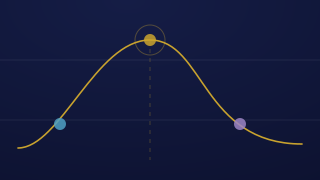
Continuous administration is the fastest route to a downregulated receptor. The response does not stop abruptly — it erodes, which is worse, because the natural reading of a fading effect is that the dose is too low.
That reading leads to more compound, which accelerates the same downregulation. It is a loop, and it is expensive in both directions.
Where eight and four come from
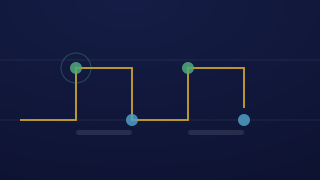
Eight on, four off is a convention rather than a law, and it is a reasonable default for most of the secretagogue and repair compounds in this catalogue. Eight weeks is long enough to read a real result past the noise of the first fortnight; four is long enough for receptor sensitivity to recover meaningfully.
Not everything follows it. The GLP-1 class is titrated continuously and does not cycle this way, and a foundational compound like NAD+ is commonly run at a maintenance dose year-round. Match the schedule to the mechanism, not to the calendar.
The off period is part of the protocol
This is the reframe worth taking away: the four weeks off are not a pause between protocols. They are the part of the protocol that keeps the eight weeks working.
If that sounds like it costs you a third of the year, compare it against the alternative — running continuously into a receptor that has stopped answering, and paying for the compound anyway.