Every peptide supplier will send you a certificate of analysis if you ask. Most of them are useless — not forged, just carefully uninformative. The trick is knowing which four fields carry the weight, and what their absence is hiding.
1. Purity, and the method beside it
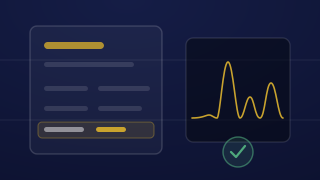
A purity figure without a method is a number someone typed. You want HPLC named explicitly, with the percentage and ideally the chromatogram attached. Anything above 98% is normal for a competent manufacturer; below that, ask what the remainder is.
The remainder matters more than the headline. Residual solvent, truncated sequences and counter-ion content are all "impurity", and they are not equally benign.
2. Identity by mass spectrometry
Purity says the vial is mostly one thing. Identity says that thing is the peptide you ordered. Look for a mass-spec result with the observed molecular weight next to the theoretical one — they should agree to within a fraction of a dalton.
A COA with purity but no identity is the most common gap we see, and it is the one that lets a mislabelled vial through.
3. Endotoxin load
Rarely printed, always relevant for anything injectable. Expressed in EU/mg. If a supplier has never tested for it, they will tell you it is not required — which is true, and beside the point.
4. The batch number, and whether it is yours
This is the one that separates documentation from decoration. A COA belongs to a batch. If the code on the certificate does not match the code on the vial in your hand, you have been sent a sample document from a batch you did not buy.
Ask for the certificate for your batch specifically, before you order. How quickly it arrives tells you most of what you need to know about the supplier.